Auto Maintenance
10% OFF
ALL PREMIUM AGM BATTERIES


Offer expires 08/17/26
View DetailsText & Save · Get an extra $10 off your next service* tap to join or Text JOIN to 39084 for exclusive text-only deals!
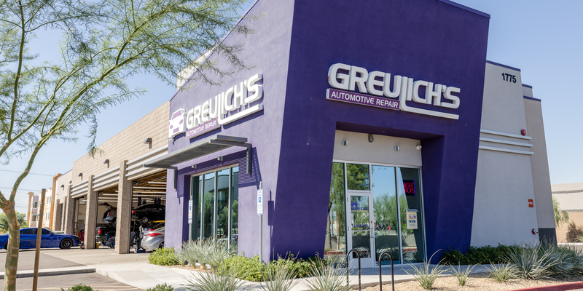
Store #1264
1775 W Happy Valley Rd, Phoenix, AZ 85085
Get Directions| Sunday | Closed | |
| Monday | 7:30 am – 5:30 pm | |
| Tuesday | 7:30 am – 5:30 pm | |
| Wednesday | 7:30 am – 5:30 pm | |
| Thursday | 7:30 am – 5:30 pm | |
| Friday | 7:30 am – 5:30 pm | Open now |
| Saturday | 7:30 am – 5:30 pm |
Offer expires 08/17/26
View Details
Offer expires 08/17/26
View DetailsAt Sun Auto Tire & Service in Phoenix, AZ, we provide expert auto repair with a friendly, neighborhood feel. Our Sun or ASE-certified technicians are equipped to handle everything from routine maintenance to complex repairs, all with precision, care, and clear communication you can trust.
A clear vehicle status report plus expert technician insights, so you can plan ahead with confidence.
Learn More24-month/24,000-mile nationwide limited warranty on qualifying repairs.
Learn More
We've put together the most important information on tires, vehicle maintenance, repairs, warranties, and more to help you drive with confidence.
Extreme Arizona heat affects battery health by accelerating degradation and leading to premature failure as prolonged exposure to high temperatures strains the internal components. To combat this, it is essential to have regular battery checks and maintenance performed. This ensures the electrical system is functioning properly, especially during the hot months when the cooling and charging systems are working their hardest to keep the vehicle operational and comfortable.
Extreme heat in Tempe affects battery health by causing fluid to evaporate and internal components to break down more quickly due to prolonged exposure. To counteract these effects and maintain vehicle performance, it is necessary to perform expert battery testing and maintenance. Checking the health of the charging system and the battery’s ability to hold a charge will help identify if the heat is causing internal damage, ensuring the car continues to run reliably in the high temperatures.
Extreme heat conditions in Mesa affect battery health by causing battery fluid to evaporate more quickly, resulting in internal corrosion and reduced charging capacity. To prevent these issues, it is essential to have the battery checked regularly for internal resistance. Proper battery testing and replacement services ensure the vehicle remains reliable and starts smoothly, especially during the hot months when the car’s electrical system is under the most significant amount of stress.
Scottsdale’s heat causes faster wear on automotive electrical systems by shortening the lifespan of the battery and placing significant strain on the cooling system and air conditioning. This increases the risk of being stranded due to premature failure. To combat this, it is crucial to have regular maintenance checks including battery inspections and cooling system services. Ensuring that the starting power is consistent is vital for handling the extreme Arizona desert climate.
Mesa’s extreme heat affects the chemical balance of a car battery by accelerating degradation and shortening the lifespan of the vehicle’s power source. To ensure the battery remains reliable, it is essential to have it regularly tested and replaced as needed. High heat leads to a process where the acid separates from the water, which can damage the lower portion of the lead plates. Detailed diagnostics are required to ensure a battery remains in optimal condition despite the sun.
Extreme heat in Phoenix affects battery life by causing fluid evaporation and internal damage that leads to reduced cranking power and unexpected breakdowns. To combat this risk, it is essential to have the battery regularly checked for internal cell damage. Professional inspections and replacements are the only way to ensure a vehicle remains reliable in the heat. Regular service ensures the car is ready for the unique demands of the desert and the high temperatures found under the hood.
Chemical degradation in Phoenix happens 24/7 during the summer months, putting constant stress on the battery and the electrical charging system. Because the nights often stay above 90 degrees, the battery never has a chance to cool down and recover from the day’s heat. Proactive battery testing and electrical system analysis can identify potential failures before they happen. This ensures the vehicle stays reliable and the battery has the power to withstand the prolonged and extreme Arizona summer heat.
Scottsdale summers do not just kill batteries; they degrade engine oil, tire rubber, and vital cooling components at a much faster rate. High temperatures cause the oil to thin out and the tire rubber to become more susceptible to blowouts. At the same time, the battery is losing its ability to hold a charge due to the intense environmental stress. A holistic check of all heat-sensitive components is necessary to ensure a vehicle is prepared for the seasonal shift and can handle the extreme Arizona desert climate.
Triple-digit Phoenix heat leads to self-discharge, which is a process where a battery loses its stored power even while the car is turned off. High temperatures cause the chemical reactions inside the battery to stay active, slowly draining the voltage until there is not enough left to turn the starter. Comprehensive health checks can verify if a battery is maintaining its voltage overnight. Preventing internal damage from fluid evaporation is the only way to avoid the frustration of a sudden no-start condition in the summer.
Phoenix heat is technically more damaging to car batteries than freezing winters because it causes permanent chemical changes and accelerates internal corrosion. While cold temperatures slow down a battery’s power, heat permanently destroys the internal grids. This leads to frequent no-starts as the battery loses its ability to transfer electricity to the starter motor. Monitoring fluid levels and preventing the buildup of terminal corrosion are necessary steps to maintain vehicle performance and reliability in a heatwave.
Avondale’s heat causes the sulfuric acid in a battery to react more aggressively, eating away at the internal lead and reducing charging capacity. This process, known as grid corrosion, is the primary reason why batteries fail so much faster in Arizona than in other states. As the metal grids inside the battery thin out, they can no longer conduct electricity efficiently. Regular inspections are the best way to determine if a battery has been compromised by this chemical process before it reaches the point of failure.
Prolonged heat exposure in Queen Creek dries out battery cells, leading to dead spots that cause intermittent starting issues and eventual total failure. As the liquid electrolyte level drops, the top of the lead plates is exposed to air, which causes rapid oxidation. This damage is irreversible and significantly reduces the amount of power the battery can provide to the starter. Regular inspections are required to ensure the battery is not suffering from this type of internal heat damage.
Extreme Glendale temperatures lead to high-temperature oxidation, which rapidly saps a battery’s charging capacity and results in internal corrosion. This process occurs because heat speeds up the movement of molecules inside the battery, causing the internal grids to break down and shed their active material. Regular load testing is the only way to verify that a battery still has the structural integrity to hold a charge when the outdoor mercury rises above triple digits for consecutive weeks.
In Surprise, high under-hood temperatures act like an oven, baking the battery and shortening its expected life by several years compared to more temperate climates. Excessive heat accelerates the chemical reactions inside the battery cells, which wears down the internal components much faster than normal operation. Keeping a vehicle well-maintained involves checking for terminal corrosion and testing the voltage regularly to ensure the battery can survive the notoriously hot Arizona summer months.
You should service your vehicle every 5,000 to 7,500 miles or every 6 months, whichever comes first, for routine maintenance like oil changes and inspections. Always check your owner’s manual, as some vehicles and driving conditions may require more frequent attention to keep everything running smoothly and safely.
Any of our friendly, neighborhood locations can help you determine the schedule that’s best for your car. In many cases, the maintenance schedule is determined by the manufacturer for optimal service life for your vehicle; this can be found in the owner’s manual.
Appointments are recommended, but walk-ins are always welcome.
Absolutely. We provide clear estimates and only complete the work you approve.
It could be something simple or serious. We recommend a diagnostic scan to find the cause.
After each oil change at Greulichs, our technician will place a reminder sticker in the upper left-hand corner of your windshield. For added convenience, we can also send you a service reminder when it’s time for your next appointment. To enroll in this program, ask your Service Advisor for details.”
No. In fact, it is against the law for a manufacturer to dishonor their warranty just because the vehicle was serviced elsewhere. As long as the service is performed by capable car mechanics like the ones at your friendly neighborhood Greulichs, your warranty is valid.
